Before paying a supplier, hiring a contractor, signing a partnership, renting property, choosing a logistics provider or onboarding a vendor, you should know how to verify a Nigerian company.
A business can have a nice logo, active social media page and convincing sales message, but that is not enough. Verification means comparing official records with the real-world details the business gives you: name, registration number, address, phone number, website, invoice, bank account and service claims.
This guide explains how to use CAC public search, RC or BN numbers, TIN verification, sector checks, online profiles and red-flag checks before you pay or sign anything important.
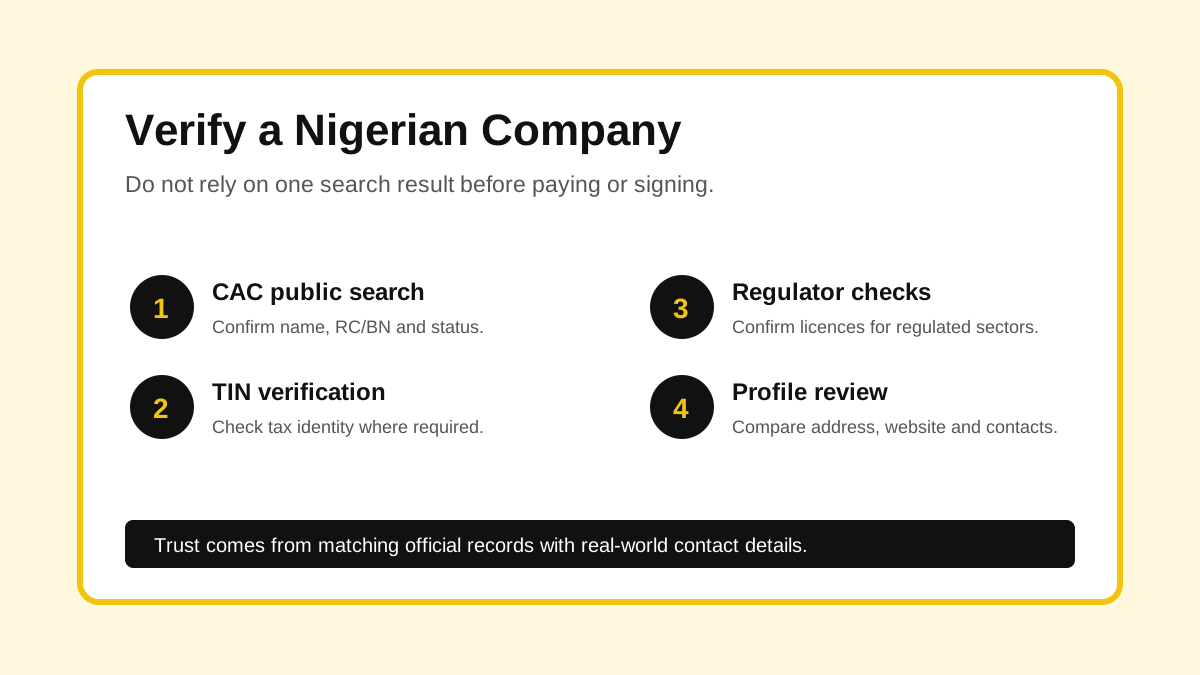
Researching a Nigerian business?
Use MyNigeriaBusiness.NG to compare public business profiles, categories, locations, contact details and service information.
What does it mean to verify a Nigerian company?
Verifying a company means checking whether the business identity is consistent and credible across multiple sources.
For serious transactions, do not rely on one screenshot or one search result. Check the CAC record, tax identity where needed, address, website, phone number, email address, invoice, contract details, online business profile and any regulator that applies to the industry.
The goal is not to prove that every registered business is safe. Registration is only one signal. The goal is to reduce avoidable risk before you send money, share sensitive documents or sign a contract.
Step 1: Ask for the correct business name
Start with the exact registered name, not only the brand name.
Many Nigerian businesses trade with a shorter public name but register a longer legal name with CAC. For example, a brand may use a short trading name on Instagram, while the CAC record contains a full company name ending with Limited.
Ask for:
- Registered business name or company name
- RC number, BN number or IT number where available
- Business address
- Official website or verified profile link
- Invoice or proposal carrying the same business details
Step 2: Search CAC public records
CAC public search allows users to search existing companies and business entities. The public search page includes options such as all records, RC number, AV code and approved name.
Use CAC public search to compare the business name and registration details you were given. If you have the RC or BN number, search with that number. If you only have the name, search by approved name or all records and compare carefully.
When checking CAC records, look for:
- Registered name
- Registration number
- Entity type
- Status where available
- Whether the result matches the business you are dealing with
If the registration number leads to a different name, pause. If the business refuses to provide a registration name for a serious transaction, ask more questions.
Step 3: Understand RC, BN and IT numbers
A limited company usually has an RC number. A registered business name usually has a BN number. An incorporated trustee usually has an IT number.
People sometimes call all of these a company code, but they are not always the same. If you need a deeper explanation, read our guide to company code in Nigeria, RC number and BN number.
The number should match the entity type. A sole proprietor with a registered business name may give a BN number, not an RC number. An NGO may give an IT number.
Step 4: Verify TIN when tax identity matters
For vendor onboarding, corporate procurement, tax invoices, bank forms and government processes, CAC registration may not be enough. You may also need to verify tax identity.
The Nigeria Revenue Service TIN verification system allows search using TIN, RC/BN or phone number. Use it when you need to confirm tax identity or compare tax registration details with CAC details.
If the tax record, registered name and invoice details do not align, ask for clarification before proceeding.
Step 5: Compare address, website and contact details
Official registration is useful, but practical verification also depends on contact details.
Check whether the business address, phone number, email address and website appear consistently across:
- CAC or registration documents
- Company website
- Invoices and contracts
- Business directory profiles
- Google Business Profile or map listings
- Social media profiles
A mismatch is not always fraud. Businesses move offices, rebrand or change phone numbers. But unexplained mismatches should slow you down.
Step 6: Check sector licences and regulators
CAC registration does not prove that a company is licensed to operate in every sector.
Some industries need additional approvals, licences or professional membership. Examples can include banking, insurance, healthcare, schools, legal services, real estate, travel, oil and gas, construction, security, food, pharmaceuticals and designated non-financial businesses.
If a company claims to offer a regulated service, check the relevant regulator or professional body before paying.
Step 7: Review online business profiles
A directory profile does not replace official verification, but it helps you compare public details.
On MyNigeriaBusiness.NG, a useful profile should help users review business name, category, location, phone number, website, services and profile information. You can start from the Nigeria business directory or browse businesses by category and location.
If you own a legitimate business, a complete public profile helps customers verify your identity and understand what you do.
Own a registered Nigerian business?
Add your business name, category, location, contact details and services so customers can verify and contact you more easily.
Step 8: Ask for proper invoice and contract details
For serious transactions, ask for an invoice, contract or purchase order that carries the same identity details you verified.
Check:
- Business name
- Registration number where included
- Address
- Email and phone number
- Bank account name
- Service description
- Payment terms
- Refund or dispute terms where relevant
If the bank account name is unrelated to the business name, ask for a clear explanation and supporting documentation.
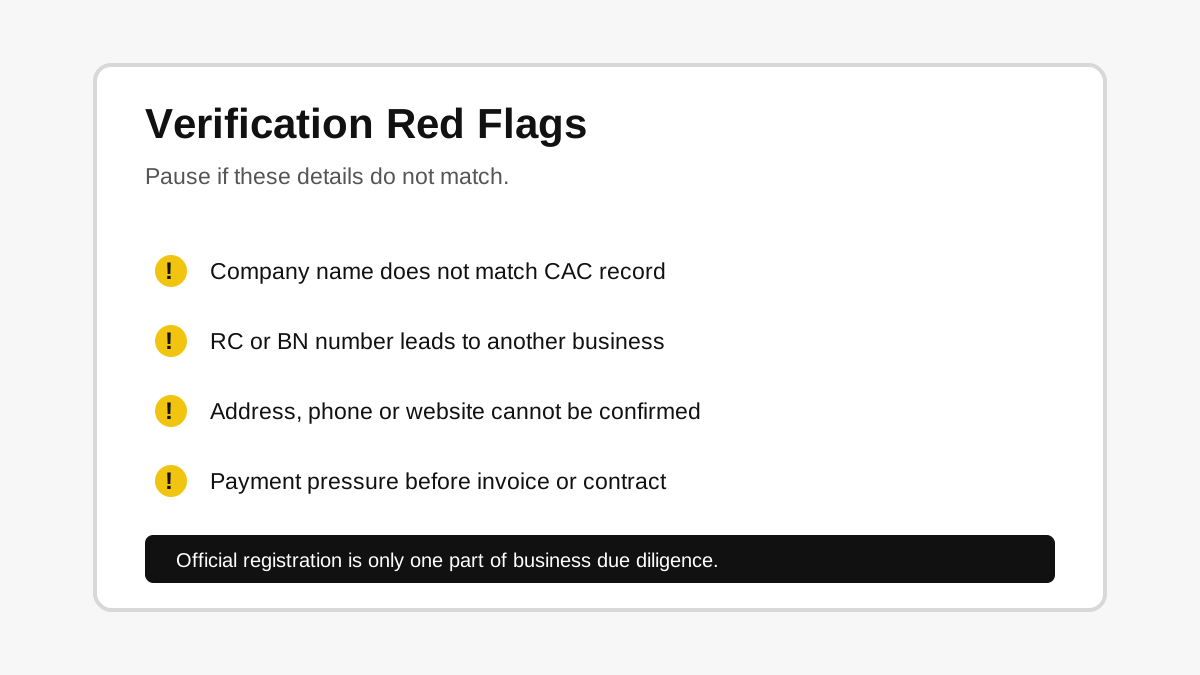
Red flags when verifying a Nigerian company
- The business name does not match the CAC result.
- The RC or BN number belongs to another entity.
- The business refuses to provide registration details for a serious transaction.
- The address cannot be confirmed.
- The website, invoice and bank account use different names.
- The company claims to be licensed in a regulated sector but cannot show evidence.
- You are pressured to pay before seeing an invoice or contract.
- The business only communicates through temporary or anonymous channels.
- Online reviews or complaints reveal repeated unresolved issues.
Simple verification checklist
- Get the registered name.
- Ask for RC, BN or IT number where relevant.
- Search CAC public records.
- Compare the registration result with the trading name.
- Verify TIN if tax identity matters.
- Check address, phone, website and email.
- Review business directory and public profiles.
- Check sector regulators where relevant.
- Ask for invoice or contract details.
- Pause if records do not match.
Frequently asked questions
How do I verify a Nigerian company?
Start with CAC public search, compare the registered name and registration number, check tax identity where needed, review contact details, and confirm licences for regulated sectors.
Can I verify a Nigerian company with an RC number?
Yes. CAC public search includes an RC number search option. You can compare the result with the business name, documents and contact details you were given.
Is CAC verification enough before paying a company?
No. CAC verification confirms registration information, but you should also check tax identity, address, phone number, website, invoice, contract details and sector licences where relevant.
What if a business has no CAC record?
Some informal businesses may not be registered, but for serious transactions you should understand the risk. Ask for identity, references, address, invoice and other proof before paying.
Can MyNigeriaBusiness.NG verify a company for me?
MyNigeriaBusiness.NG helps users discover and compare business profiles. Official registration and tax checks should still be done through CAC, NRS and relevant regulators.
Official links and useful resources
- CAC public search: https://icrp.cac.gov.ng/public-search/
- CAC company search service: https://cac.gov.ng/services/company-search
- CAC homepage: https://cac.gov.ng/
- NRS TIN verification: https://apps.firs.gov.ng/tinverification/
- Company code guide: Company code in Nigeria
- Business registration guide: Business registration in Nigeria
- Find businesses in Nigeria: https://mynigeriabusiness.ng/find-a-business
- List your business: https://mynigeriabusiness.ng/register
Explore the Nigeria business directory
Use MyNigeriaBusiness.NG to find businesses, compare profiles, or create a complete listing for your own company.
Leave a Reply