Business registration in Nigeria is more than getting a certificate. A serious business needs the right CAC structure, tax identity, banking readiness, clear public contact details and a profile customers can trust.
This guide explains how to register a business in Nigeria, how CAC registration differs from TIN, when to choose a business name or limited company, what to do after approval, and how to make the business easier for customers, banks, vendors and partners to verify.
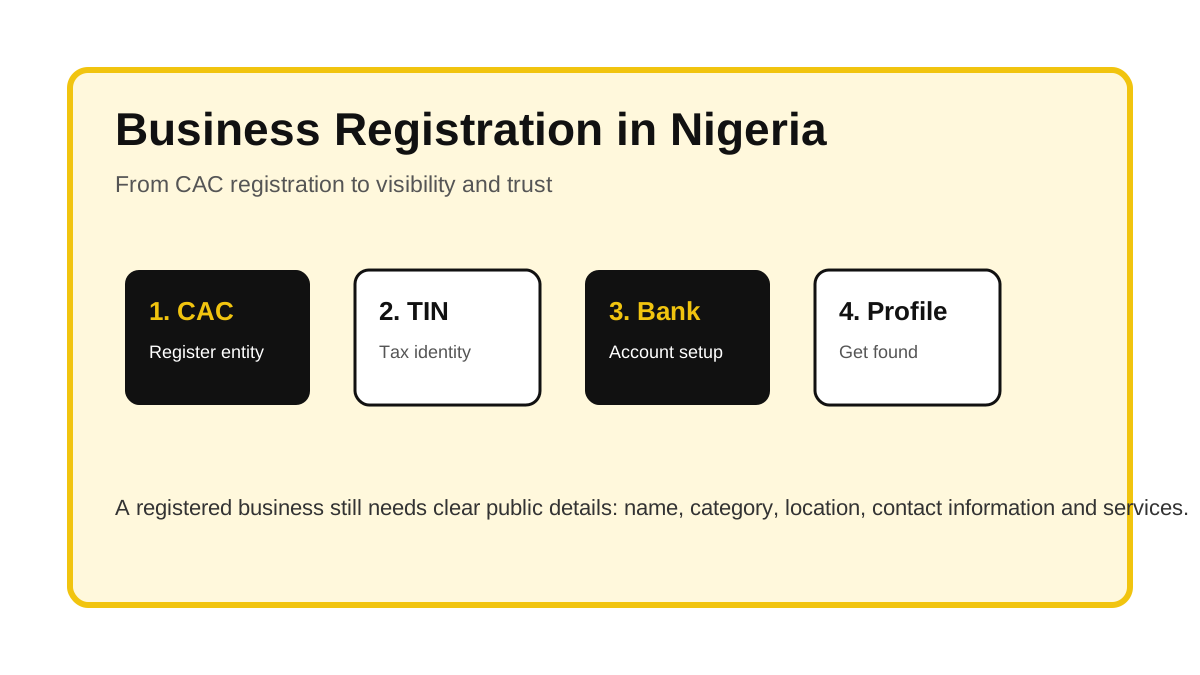
Already registered your business?
Add your business to MyNigeriaBusiness.NG so customers can find your category, location, contact details, website and services.
What does business registration mean in Nigeria?
Business registration usually means creating or recording a business entity with the Corporate Affairs Commission. CAC is the official Nigerian corporate registry for business names, companies, incorporated trustees and other entity types.
For a small shop, freelancer, agency or sole proprietor, registration may mean a business name. For a growing business that needs a separate corporate structure, directors and shareholders, registration may mean a limited liability company.
Registration helps with legal recognition, business bank accounts, contracts, vendor onboarding, payment processing, customer trust and public verification.
Step 1: Choose the right business structure
Before you open the CAC portal, decide what structure fits your business.
- Business name: common for sole proprietors, small service providers, shops, freelancers, artisans and partnerships.
- Private limited company: useful for businesses that need a stronger legal structure, shareholders, directors, contracts, funding readiness or corporate clients.
- Incorporated trustee: used for NGOs, foundations, churches, mosques, associations, clubs and similar non-profit bodies.
- LP or LLP: useful for certain partnership arrangements where professional advice is recommended.
Do not choose based only on cost. Choose based on ownership, risk, future plans, client expectations, tax and regulatory needs.
Step 2: Reserve and register the business with CAC
CAC business name registration guidance says users should check name availability, complete the pre-registration form, upload relevant documents and pay the filing fee through the Company Registration Portal.
For companies, CAC also points users to digital pre-registration and submission of supporting documentation through the secure Company Registration Portal.
If you need the detailed portal process, read our CAC pre-incorporation guide for Nigeria.
Step 3: Prepare the details CAC may ask for
The exact requirements depend on the entity type, but you should prepare:
- Proposed business names
- Business classification and type
- Nature of business
- Registered address
- Email address and phone number
- Owner, proprietor, director, shareholder, partner or trustee details
- Means of identification where required
- Passport photograph and signature where required
- Payment details
Use consistent names and details. Inconsistent spelling between your CAC application, ID, bank documents and public profile can create avoidable verification problems later.
Step 4: Understand RC, BN and IT numbers
After approval, CAC registration details identify your business.
- A limited company usually has an RC number.
- A registered business name usually has a BN number.
- An incorporated trustee usually has an IT number.
These numbers are often requested by banks, suppliers, government portals and corporate clients. If someone asks for your company code, they may mean your RC, BN, IT or tax number depending on the context. Read our guide to company code in Nigeria for a fuller explanation.
Step 5: Verify or generate tax identification details
CAC registration and tax identity are related, but they are not the same thing.
The Nigeria Revenue Service TIN verification system allows users to search using TIN, registration number, RC/BN or phone number. This is useful when a bank, vendor or government process asks for tax identity confirmation.
After CAC registration, confirm whether your business tax details are active and whether you need to complete any tax registration or update process for your business type and location.
Step 6: Open a business bank account where needed
A business bank account is not always the first thing every small business owner needs, but it becomes important when you want cleaner records, corporate payments, invoices, vendor onboarding or payment processing.
Banks may ask for CAC documents, registration number, TIN, identity documents, address details, board resolution for some companies and other information depending on the account type.
If you are comparing financial institutions, start with our banks in Nigeria directory and then confirm requirements directly with the bank.
Step 7: Check sector-specific registrations
CAC registration does not automatically give permission to operate in every regulated sector.
Some businesses may need additional permits, licences or registrations. Examples can include healthcare, education, financial services, legal services, real estate, food, hospitality, construction, oil and gas, travel, security, professional services and regulated non-financial businesses.
When in doubt, check the relevant regulator or speak with a qualified professional before advertising regulated services.
Step 8: Create a public business profile
After registration, customers still need to find you. A public business profile helps people confirm your business name, category, location, services, contact details, website and trust signals.
A strong profile should include:
- Business name
- Category
- Location and service area
- Phone number and email address
- Website or social profile
- Business description
- Photos where useful
- Registration details where appropriate
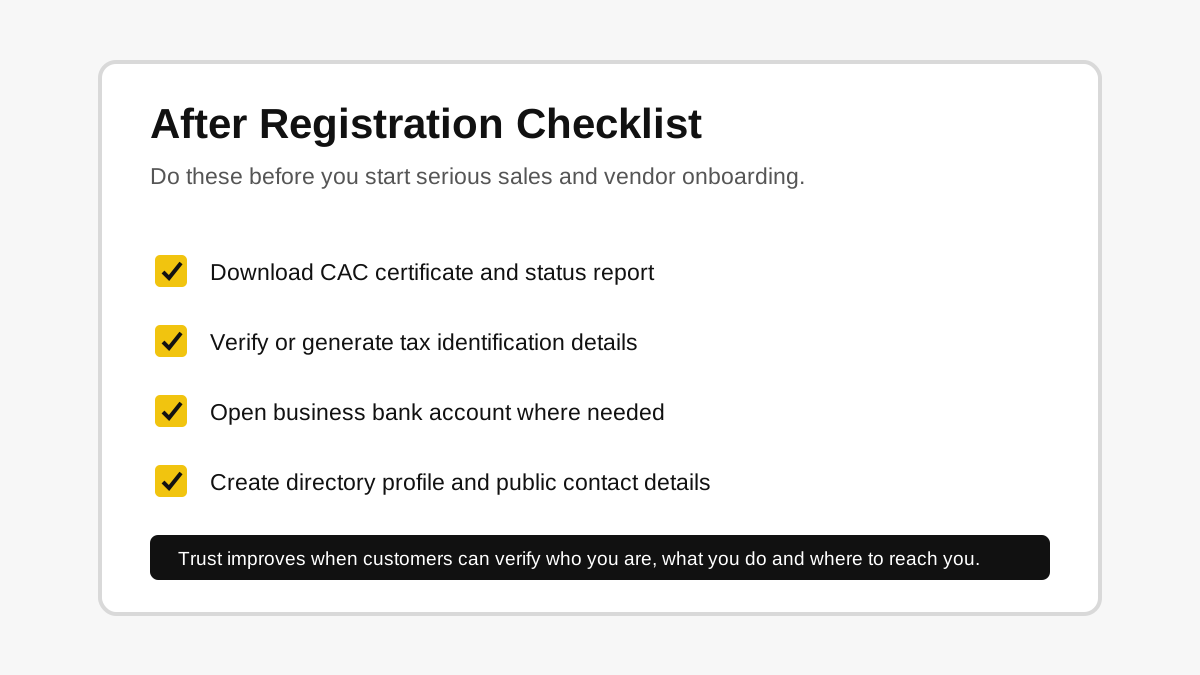
Make your business easier to verify
Create a clear listing with your business name, category, location, contact information and services.
Business name vs limited company in Nigeria
A business name is usually simpler and may be enough for many sole proprietors and small businesses. A limited company is usually more suitable when the business has shareholders, directors, larger contracts, external investors, significant liability concerns or corporate clients.
If you expect to bid for bigger contracts, open more formal corporate relationships or bring in partners, ask for professional advice before choosing.
Common business registration mistakes
Registering the wrong structure
Changing structure later can be more stressful than making the right choice at the beginning.
Using inconsistent names
Your CAC name, bank documents, tax records, invoices and public profile should be consistent.
Ignoring tax identity
Registration does not end with CAC. Check your tax obligations early.
Keeping the business invisible online
If customers cannot find your business name, category, contact details or location, registration alone will not bring visibility.
Assuming CAC registration covers every licence
Regulated sectors may need additional approval beyond CAC registration.
Business registration checklist
- Choose the correct structure.
- Search and reserve a suitable name.
- Complete CAC registration details.
- Upload required documents.
- Pay official fees through the portal.
- Track approval or query status.
- Download CAC documents.
- Verify or generate tax identity details.
- Open a business bank account where needed.
- Check sector permits or licences.
- Create a public business profile.
- Keep business records updated.
Frequently asked questions
How do I register a business in Nigeria?
Choose the right structure, reserve a business name through CAC, complete the registration form, upload required documents, pay official fees, track approval, then handle tax, banking and public profile steps after registration.
Is CAC registration the same as TIN registration?
No. CAC registration creates or records the business entity. TIN is used for tax identity and tax records. A business may need both.
Should I register a business name or limited company?
A business name is often simpler for small operators. A limited company is usually better when you need a separate corporate structure, shareholders, directors, stronger contracts or investor readiness.
Can I register my business online?
Yes. CAC registration is handled through its online portal processes. Requirements vary by entity type.
What should I do after registering my business?
Download your CAC documents, verify tax details, set up banking where needed, check sector rules, prepare customer-facing details and create a complete business listing.
Official links and useful resources
- CAC homepage: https://cac.gov.ng/
- CAC business name registration: https://cac.gov.ng/services/business-name
- CAC company registration: https://cac.gov.ng/services/company-registration
- CAC iCRP: https://icrp.cac.gov.ng/
- Nigeria Revenue Service TIN portal: https://taxid.nrs.gov.ng/
- NRS TIN verification: https://apps.firs.gov.ng/tinverification/
- SMEDAN registration: https://smedanregister.ng/register
- Find businesses in Nigeria: https://mynigeriabusiness.ng/find-a-business
- List your business: https://mynigeriabusiness.ng/register
Explore the Nigeria business directory
Use MyNigeriaBusiness.NG to find businesses, compare profiles, or create a complete listing for your own company.
Leave a Reply